Friday, 13 September 2013

SCRIPTWRITING

In Black Snyder's scriptwriting book Save The Cat he talks about what differentiates a well-written main character from the opposite is that we must like the main character. He gives a comparison of Lara Croft 2 to Sea Of Love, Lara Croft 2 did not attract audiences like it was expected to because though Croft was 'cool', she was also cold and humourless so the audience never actually liked her. Where as in the first scene of Sea Of Love not only does Al Pacino come across as a 'cool' cop saying phrases like "catch you later", we also learn to like him from the 2 seconds of the film where he flashes his badge to let the criminal through because he has his son with him.

This shows that it is vital that our script allows for the audience to immediately like our main character, especially if later on in the short film we then expect the audience to feel sympathy for him/her.

In the book Alternative Scriptwriting by Ken Dancyger and Jeff Rush they discuss the conventions of any script that must be followed. They state that any story either revolves around conflict, discovery or reversal and without conflict as story is flat. They also add that turning points are key to any script as they are what engage the audience. This book also looks at using humour as a tool, it says that humour should be used to put the audience at ease with a character as the audience is more likely to like the character once they have shared a laugh with them.

In our script we aim to have one turning point about halfway through the script where the mood changes and conflict is introduced. The first half will be more about the character's everyday life and the audience will discover what it is like for this child. The second half will be where the audience feels sympathy for the child as any problems arise for them. What this book says about humour has made me think about our script since we had planned to add subtle humour in act 1 of our film, tasteful humour that was based around the oddities of the child's life. However from what Dancyger and Rush say, it has made me realise that this will only work if the audience is laughing with the child, not at them. This will be difficult to do as it won't be easy to make it look like the child sees any humour in their disability. We also want to make sure that the humour is all tasteful and doesn't in any way demean the child or their disability.

tb

AUTISM

As we have decided that we will definitely make a film about a child that suffers from autism, I felt that I should blog about my understanding of the condition, since in making the film we would never want to offend anyone who is associated with the disorder. I have had experience with ASD in a mild way however would not claim be an expert or have had first-hand experience for a lot of time.

"Autism is a lifelong developmental disability that affects how a person communicates with, and relates to,  other people. It also affects how they make sense of the world around them."

Autism is part of a spectrum condition which is known as ASD. This spectrum varies from very severe cases that can entirely stop people from being able to live an independent life, or very mild versions of ASD can mean that people may only need very little help.

Common symptoms associated with autism can be:
learning disability
over/under sensitivity to light, sound, taste, touch, smells or colours
obsessing with certain activities or objects

Asperger syndrome is a disability also on the ASD spectrum that can mean people have above average intelligence. They don't have as many problems with speech as autistic people do, however they may still have difficulties with processing or understanding language.

Autistic people, especially children, have tendencies to get caught up in one activity and can focus on that one thing for hours on end. It is also common that autistic people have a very fixed daily routine and can often get quite upset if if is disturbed.

Autism and any other forms of ASD a very difficult disorders to deal with and can affect people lives in a severe way. We aim to show the difficulties of being or being with someone with autism and showing it in two lights, one being the day to day routine in a light-hearted way, and the second being the extremely difficult side when the problems associated with autism arise.

tb

FOCUS GROUP


We gathered a focus group of 6 people to get their views on a short film I had already researched, and to ask a few questions on the plans for our short film.

The short film I showed was An Ordinary Day. Their response to the short was that it had quite a depressing storyline, and this is despite the fact that the short does try to have a happy ending. The group were taken aback by how sad the narrative was at the start, that they walked away from the film remembering this, not the happy ending at all. I deliberately chose this short film to compare their reactions to both happy and sad parts to see which parts they remembered best at the end of the film, and which parts they liked/disliked. They said that they liked the montage sequence at the beginning of the short and that the montage idea worked well for short films. We also discussed the soundtrack of the short and they said that though they thought it was a cheesy piano track it was the only type of music they think would have worked for the film, and the short was cheesy enough by itself so the soundtrack suited it well.

I also asked them about the plans we had in place for our short film. They said that at the end of the film they would prefer to feel uplifted than depressed due to the topic of the short as they wouldn't want to leave the film thinking badly about autism. However if they felt too uplifted and happy about it then it would be far too corny, they suggested the ideal would be a balance.

Overall having the focus group was extremely useful as it highlighted that the feeling that our audience is left with at the end of the film is more vital than I had realised.

tb

AUDIENCE


tb+hh

Thursday, 12 September 2013

UPDATE #1

The research I have done so far has been assuming that I would make this short film on my own, however due to time restrains and workload we have made the decision to pair up to make our coursework. I am pairing with Harry Hancock who also had plans to make a short film in the style of social realism/drama.

From now on all the research, planning and construction I do will be working with Harry, allowing us to go into more depth with our work and making it to a higher standard.

We have decided together that we will continue the idea of making our film about a child with autism and will now together undertake our research into audience and begin writing our script and screenplay.

This is the link to Harry's blog: www.alleynsmedia-hancock.blogspot.co.uk

tb

Thursday, 5 September 2013

OTHER INFLUENCES


PARIS, TEXAS

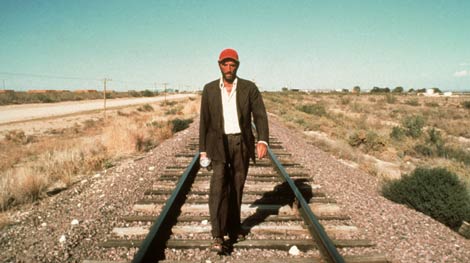
This film is a drama made in 1974 about a man who wanders out of the desert after 4 years not knowing who he is. It is my favourite film of all time and is directed beautifully by Wim Wenders who uses colour, perspective and mise-en-scene to create a film that is stunning to look at. I wanted to use quite a few elements of this film as a basis and inspiration for what I could do with my film, such as the way different coloured lighting is used so often to create a certain atmosphere. For example in this shot the different parts of the room are lit in different coloured lights to create the obscure yet warm feeling Wenders wants the audience to feel. The colour red is forever present throughout the film ranging from Travis' red baseball cap to the red radio in the Laundromat waiting room, this red emphasises Travis' emotions throughout the film until his final scene with Jane where they are both dressed in black - an iconic moment. I would like to bring Wenders' use of colour into my short film as I believe that it adds so much depth to the characters and their story and makes the film far more visually aesthetic for the audience to watch.


Paris, Texas also makes use of its wide open shots by adding perspective. For example in this shot the telephone poles snake off over the horizon adding depth-of-field to the shot making the vast expanse of desert look even more timeless and empty. The majority of my locations will be indoors, however even when inside I would like to use perspective in such a way that makes spaces look larger or smaller than they actually are. This can be done by certain camera angles and movement, and can be used especially from the child's perspective to make them either feel alone in the world (wider shots)or closed in and claustrophobic (closer shots).


THE CURIOUS INCIDENT OF THE DOG IN THE NIGHTTIME

This book is from the perspective of a heavily autistic boy. I will use this book as a reference to the personality of my main character, for example the boy in this book is obsessed with prime numbers because a common trait of people with autism is to become very attached to certain things and create obsessions.


ETERNAL SUNSHINE OF THE SPOTLESS MIND

In this film there is one scene in which everything is extremely abnormal and distorted, and some special effects are used for this. However this scene is also filmed from the character's point of view, and therefore could be similar to the part of my film in which the main character loses his temper. The scene is in the dark but is lit well so that the things that are supposed to scare you are the only parts that stand out.

Another way of making the scene more abstract would be to overlay different shots using with the top one being translucent. With the framing of the shots being slightly different it would give the appearance of the character going slight crazy as everything would appear distorted.


THE BLACK BALLOON

The black balloon is a drama about a family with an extremely heaving autistic son who makes it very hard for his brother to fit in. The film portrays autism as a very difficult disability to deal with, and shows how it affects everyone else as well. I hope to take from this film the way that the other family members interact with their autistic relative. I also hope to take away some of the behaviour and personality traits of the autistic child as it shows how difficult life is for an autistic person. For example Charlie can't help but always want to behave differently from how he is told to behave.

At the beginning of the film the graphics used in the opening sequence also reflect Charlie's personality, for example the name of some of the objects in the shot are on the screen, it is as if it is from Charlie's point of view.

tb

Tuesday, 3 September 2013

CONVENTIONS OF SHORT FILMS

After watching many short films I have found that there are no real conventions to a short film. A lot of short films don't even have narratives that particularly make sense or have a conclusion of any sort. This means that a short film can be about any topic at all, for example Point Of View is a day in the life narrative that has no purpose or morals that the viewer is supposed to take away. On the other hand many short films try to pull as many emotional strings as possible and are based around a deep issue, such as Jump which is about a man who wants to commit suicide. My research so far has led me to believe that the short films that are about deeper issues are more effective as they leave the viewer to think about the issue the film addresses. Because of this I have decided my film will be a drama about a child with some sort of ASD (Autism, Aspergers, etc), and it will deal with the problems that children who suffer from this have to face.


The style of filming I will use will vary as I hope to show part of the film through the point of view of the child with ASD, and part filmed in the 3rd person. The camera work in the child's POV will be much more dynamic and suited to their personality. For example even if another character was speaking, the camera may focus on an entirely unrelated object in the room. In the short film Point Of View the entire short is filmed as if through the character's eyes and I plan to use ideas from this short to help me make the POV filming look realistic. This more unconventional style of filming is more suited to shorts as the audience isn't put off by it since it will only last 5 minutes, where as a feature film with this sort of filming may frustrate the audience.

The soundtrack for my short film will be very simple and probably sparse throughout the film and won't be one track that simply runs over the entire film. I have found in my research that many short films do just have one basic track that plays over the film such as An Ordinary Day, and I have found that this can be a bit repetitive and dull, and mean that the soundtrack doesn't actually add much to the film.

Similar to the camera work the editing will vary depending on the POV. When from the child's POV, high speed editing will be used with the possible use of quick cutaways, similar to in Bear when the girl is about to cycle off the cliff. Otherwise the editing is likely to be more low speed, regular and conventional such as in Kafe in order to contrast the two views.


The locations i use will be simple everyday locations to emphasise that this is what life is like for a child with ASD everyday. Similar to An Ordinary Day the film will by about everyday life for the child and the people around them. Because of this the locations won't be especially intriguing to the audience however with the style of filming and cinematography this will hopefully bring the mise-en-scene to life.


Unlike any of the short films I have found I plan to make a more stylised film. The Plan is the most stylised of the films I research, however instead of black & white film I intend to use colour as a tool to show how the child feels or the things that affect him. For example when filming from the child's POV every colour could be enhanced and could include extremely quick cutaways to coloured lights when he is upset or confused.


In conclusion, I have decided that my short film will be a drama about a child who suffers from some form of ASD. I will aim to use more unconventional ways of filming with interesting cinematography when showing through the child's eyes, to show the contrast between how a sufferer of ASD sees the world in comparison to a non-sufferer.

tb